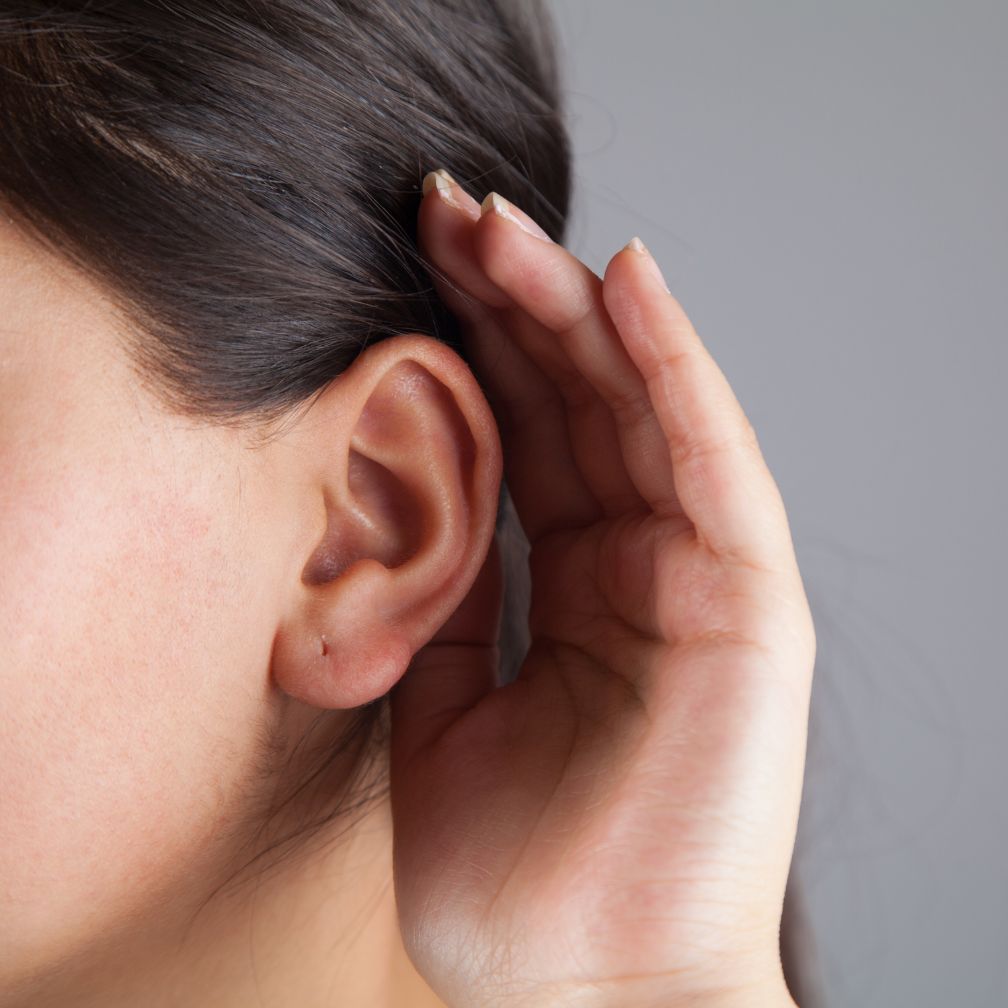
What causes that peculiar, unprompted sound that feels like ambient static or trapped air whispering in your ears? Why can’t anyone else hear it? Rest assured, this physical perception is definitely not a product of your imagination.
Fortunately, it’s probably not “phantom ring syndrome,” a condition where people who use cell phones excessively think they hear their phone ring, buzz, or beep when no one’s calling or texting them.
In most clinical scenarios, this localized baseline static is a direct manifestation of tinnitus. Make no mistake, this perceived internal audio is a legitimate medical symptom, and certain lifestyle habits can rapidly worsen its intensity.
You can still hear what people say. Instead, it functions as an omnipresent layer of sensory noise transposed directly on top of your standard daily hearing.
Let’s look at where this white noise comes from, what it is, and what you may be able to do to reduce or get rid of it.
Understanding Tinnitus: The Mechanics Behind Internal Head Static
From an audiological standpoint, tinnitus is almost always a direct proxy for localized hearing loss. It manifests as a perpetual or fluctuating sound profile that occupies the foreground of your sensory perception. Depending on the exact etiology of your condition, the frequency may blend into the background for most of the day. Alternatively, you might find yourself battling an intense presentation where the constant roar leaves you feeling completely helpless and desperate for relief.
You have likely attempted to describe this exhausting sensory distortion to friends, but this particular manifestation of hearing loss is incredibly abstract to those with normal hearing.
How can this humming noise in my head not be there? You may even question your own psychological stability, wondering if the condition is a form of auditory hallucination. You may find yourself asking how a silent hum can completely disrupt your concentration and impair your social interactions. Or utterly destroy your capacity to find peace, unwind, and sleep soundly through the night?
Nocturnal Amplification: What Happens When Ambient Sound Drops
You’ve probably noticed that the quieter it is, the worse your tinnitus gets. This structural shift happens because the internal hum doesn’t have to fight against real-world sound waves—as seen when people lock down their bedrooms for total quiet at night. They operate without a television background feed, avoid running any radio streams, and eliminate all ambient audio. If you combine a silent room with late-night introspection, the moment your awareness drifts to the localized humming, it transforms into an inescapable focus point that artificially amplifies the distress. Whether you experience soft or loud noises, low or high pitches, a quiet bedroom at nighttime is the perfect situation for tinnitus to take hold.
Is that weird sound like wind really tinnitus?
Not only is tinnitus hard to explain to someone who doesn’t have it, but this condition can also become complicated when you try to talk to someone else who is suffering from tinnitus. Because their internal audio profile may feature entirely unique pitches or patterns compared to your own, you might mistakenly assume your specific condition has a different medical diagnosis.
Yet, despite these tonal differences, your underlying diagnosis remains highly probable. This is due to the reality that tinnitus is a highly polymorphic condition, expressing itself through a vast array of acoustic shapes depending on the individual. These include, but aren’t limited to, hearing:
- The fuzzy roar of unchanneled television feedback
- An unceasing structural or electrical humming sound
- An active, vibrating internal buzz resembling an electrical current
- Ringing
- A blunt, repetitive thumping sequence inside the canal
- A flat, continuous telephonic dial tone
In almost all instances, you are completely isolated in your perception of the tinnitus-induced white noise. So if you ask a primary physician to confirm your symptoms, they probably can’t. The practitioner simply has to trust your diagnostic description, as there is no physical signal for them to measure.
Regrettably, this inability to physically verify the sound often causes individuals to feel isolated by a primary care provider who doesn’t specialize in permanent hearing loss.
Sharing his experience, a steelworker named Thomas noted: ‘When the internal ear static first became chronic, I sought help from my primary care provider. Though the practitioner casually acknowledged the probability of tinnitus, he failed to grasp how profoundly debilitating the constant roar was to my daily routine. He spoke about it like it wasn’t really there. He mistakenly believed I could simply choose to ignore the frequency and completely failed to provide any therapeutic pathways or solutions.”
Partnering with a true audiology specialist resolves this sense of isolation, providing you with targeted clinical paths and specialized relief protocols. Remarkably, the precise texture and rhythm of your subjective audio can yield critical clues that direct the specialist toward the right therapy.
Whooshing vs. Ringing: Identifying High-Risk Vascular Anomalies
What makes it even harder to describe this noise to a doctor is the fact that there are so many different ways tinnitus can manifest itself. For instance, if your internal static takes the form of a mechanical whooshing or rhythmic throbbing that mirrors the exact timing of your physical pulse, your diagnosis may be pulsatile tinnitus.
The good news is that pulsatile tinnitus can be treated more effectively than regular tinnitus since it’s usually caused by one or more health problems, like high blood pressure or issues with your arteries.
That whooshing sound can also be brought on by the flow of blood through narrow veins in your head, which is called a bruit. It’s critically important to get this checked out and treated, as in rare cases, the whooshing sound could be a sign that you’re heading for a seizure or stroke, either of which could prove fatal.
Objective Tinnitus: When Your Doctor Can Audibly Detect the Sound
Tinnitus is a genuine – and quite annoying – condition. Though standard variations lack external markers, specific cases of objective pulsatile tinnitus allow an experienced otolaryngologist to deploy tools like an acoustic stethoscope to physically monitor the exact same whooshing you perceive. It is vital to understand that this objective phenomenon is unique to circulatory-driven cases, a category that is statistically much rarer than standard neurological tinnitus.
What Triggers the Ringing? Uncovering Your Personal Path of Injury
In most clinical case histories, the principal cause behind this internal static is a history of sustained exposure to hazardous noise levels. Consequently, we see a massive volume of cases among stage performers, industrial operators, and manual laborers who face heavy acoustic strain day in and day out over decades.
There are some professions that are loud enough to cause workers to develop tinnitus, such as:
- Factory Work – You’re around noisy machines all day long, so that’s got to do something with your senses, right? On top of the noise, factory work can be stressful, which is another factor that leads to tinnitus and, over time, can make it much worse. Do you work near a pneumatic riveter? They are some of the worst, clocking in at over 125 decibels, which is loud enough to cause immediate, permanent hearing loss, as well as severe cases of tinnitus.}
- Modern Farming – Don’t blame it on the roosters. While those loud, early-risers clock in at around 90 decibels, there are many things on the farm that are much louder. Tractors, combines, cherry-pickers, milking machines… all of these farming implements make a lot of noise. Need to repair the fence? Even your table saw can pump out over 85 decibels, which is damaging over long periods of time.}
- Aviation – A commercial jet propulsion system generates a staggering 140 decibels of acoustic energy, even from a distance of a hundred feet. While professional aviators generally wear protective communication headsets, pilots of small or regional aircraft operate right next to the engine firewall. No passive or active headset is completely capable of shielding the inner ear from this intense, vibrating sound pressure, meaning your hard-earned flight hours are simultaneously causing gradual, permanent sensorineural damage.}
- Highway Patrol Operators – While millions ride motorcycles for recreation, any professional assignment that requires operating a high-displacement bike for an entire shift places you at extreme risk for occupational hearing loss and secondary tinnitus. The identical acoustic risk applies to the prolonged operation of snowmobiles or commercial jet skis—though very few workers ride these vehicles for a living unless they occupy a highly unique and exciting role in outdoor law enforcement.}
- Hospitality Work – Fulfilling orders in a popular nightclub requires you to constantly separate human speech from an overwhelming background environment. The amplification systems in these establishments are routinely set to hazardous levels, forcing your ears to work in overdrive just to decode a simple sentence over the roar. Should your establishment regularly host live concerts or loud acoustic events, your ears are absorbing the exact same cellular damage that causes hearing loss in professional musicians.}
Across every single one of these vocational examples, the microscopic stereocilia (hair cells) inside your cochlea were physically damaged by prolonged high-decibel exposure. These specialized cells act as the body’s natural microphones, capturing frequencies and allowing your mind to comprehend speech and music. Unlike other cellular systems in the human frame, once these delicate structures are destroyed, they are gone forever, permanently altering your balance and leaving you with a compromised sense of hearing.
Identifying Common Triggers That Exacerbate Tinnitus Intensity
On top of sound exposure, certain environmental and health factors can make the white noise in your ear worse.
- Psychological Distress – Chronic anxiety and clinical depression frequently trigger an agonizing neurological feedback loop. As your emotional symptoms amplify, your brain’s gating mechanisms fail, causing the tinnitus to seem much louder—which in turn drives your anxiety and depression to deeper levels.}
- Neglecting Auditory Self-Care – Your ear pathways signal distress through pain or fullness when environmental sound hits dangerous thresholds. Do not simply ignore the warning signs or push through the noise; prioritize ear protection, because your baseline hearing cannot be restored once it is lost.}
- High Blood Pressure – Letting your blood pressure get out of control may cut the oxygen off to your inner ear. This may not only make it worse in the short term, but it can increase the damage to your hearing over time.}
- Smoking Habits – The chemical peaks and valleys experienced between cigarettes can cause your auditory symptoms to flare up dramatically. While lighting up seems to soothe the immediate stress, the long-term toxic payload and cardiovascular damage from smoking ensure that your tinnitus will continue to worsen over time.}
- Some foods – Some people find that caffeine and artificial sweeteners make tinnitus worse. Keep a food journal to track everything you eat, along with your tinnitus level, to find out which foods make your symptoms worse.}
- Social Environments – Interacting with highly critical or anxiety-inducing people can elevate your heart rate and worsen your ear static by provoking stress and depressive patterns. It is vital to audit your close relationships to protect your health, determining whether these connections are worth the toll they take on your auditory peace. Ultimately, you cannot control how other people act, but you have complete control over how often you interact with them.}
- Gestation – Statistically, roughly thirty-three percent of expectant mothers develop acute tinnitus symptoms, which are primarily driven by rapid hormonal shifts and natural fluctuations in blood volume and pressure.}
- Deep wax build-up – Earwax pressing on the eardrum can cause odd sounds. Having that wax removed professionally could instantly stop the ringing in some cases.}
- Some medications – Opiates, antibiotics, diuretics, chemotherapy and over the counter painkillers have all shown a link to tinnitus, so you should speak with both a hearing specialist and your primary doctor to understand the risks and side effects.}
Are there any treatments for tinnitus that work?
If you suspect an underlying systemic pathology is driving your symptoms, consult with your managing physician immediately. Certain diseases will actively escalate the loudness of your symptoms, with clinical anxiety and high blood pressure being prime examples.
After all primary medical and vascular variables have been successfully managed, you can confidently explore specialized audiological interventions. Your rehabilitation roadmap can successfully integrate options like:
- Meditation, Yoga, or another relaxing activity to reduce stress. Managing stress in a healthy way without substances isn’t something that most people learn at home or in school. Many people choose to learn them because they find that these techniques work.}
- Ambient Sound Conditioning – Implementing a bedside white noise generator can supply immediate comfort when you are trying to fall asleep. It is critically important that you never attempt to blast past the internal hum using tight headphones or loud music blocks. Doing so will only inflict further trauma on your stereocilia, driving up the baseline volume of your tinnitus over the long term.}
- A hearing aid, which can be set to cancel the sound. Hearing aids today have advanced features like tinnitus cancellation. They can be programmed during the hearing aid fitting to emit a sound that cancels out the specific tone you hear.}
- Targeted Sound Therapy – This advanced treatment path focuses on neural habituation, teaching your brain to naturally dismiss the phantom signal. Sound professionals leverage specialized audio devices to play a matching tone directly into your ear canal. This continuous, low-level stimulation helps your cognitive processors relegate the ringing to the background, allowing you to refocus your attention on meaningful external sounds.}
- Cognitive Behavioral Therapy (CBT). This is a technique used by mental health professionals to undo harmful habits. If you obsess about negative news or life events you can’t control, CBT can help. It will retrain you to focus on the positive and where you do have the power to change things. This helps reduce stress.}
Analyzing the Clinical Limits of White Noise for Tinnitus Relief
You’ve heard of fighting fire with fire, but what about fighting white noise with white noise? Data from a recent medical study in the UK confirmed that although white noise sound conditioners help patients manage their symptoms, maximum relief requires pairing the audio with targeted medical counseling.
To be perfectly transparent, there is at present no definitive medical cure for chronic sensorineural tinnitus; rather, science offers a variety of highly effective management strategies to suppress your awareness of the noise.
So what else can you do to treat your tinnitus? Before initiating any treatment, you must undergo a formal, high-definition hearing assessment. An evaluation will provide clear data showing how severely the background hum is compromising your ability to follow along when family members speak. Armed with that objective audiological data, you can collaborate with your local ear specialists to build a customized treatment framework.
Audio Illusions: Explaining Phantom Melodies and Speech in Background Noise
Should you track complex orchestral arrangements or human voices within background noise, your symptoms fall outside the definition of traditional ear ringing. Rest assured, this specific illusion does not indicate that you are developing schizophrenia, dementia, or any other central psychiatric illness. The scientific explanation for this sensory trick is a benign condition known as Musical Ear Syndrome, cross-sensory apophenia, or standard audio pareidolia. These illusions occur because your central nervous system relies heavily on advanced pattern recognition to constantly organize and decode ambiguous environmental noise. Consequently, when confronted with a steady, meaningless hum, your cognitive processing filters can accidentally misinterpret the data. For example, pareidolia is when you interpret those meaningless noises into something you’ve heard before, such as music. However, if you are tracking rich, complex melodies in a room that features absolute, total silence, you may be experiencing a specialized musical hallucination.
