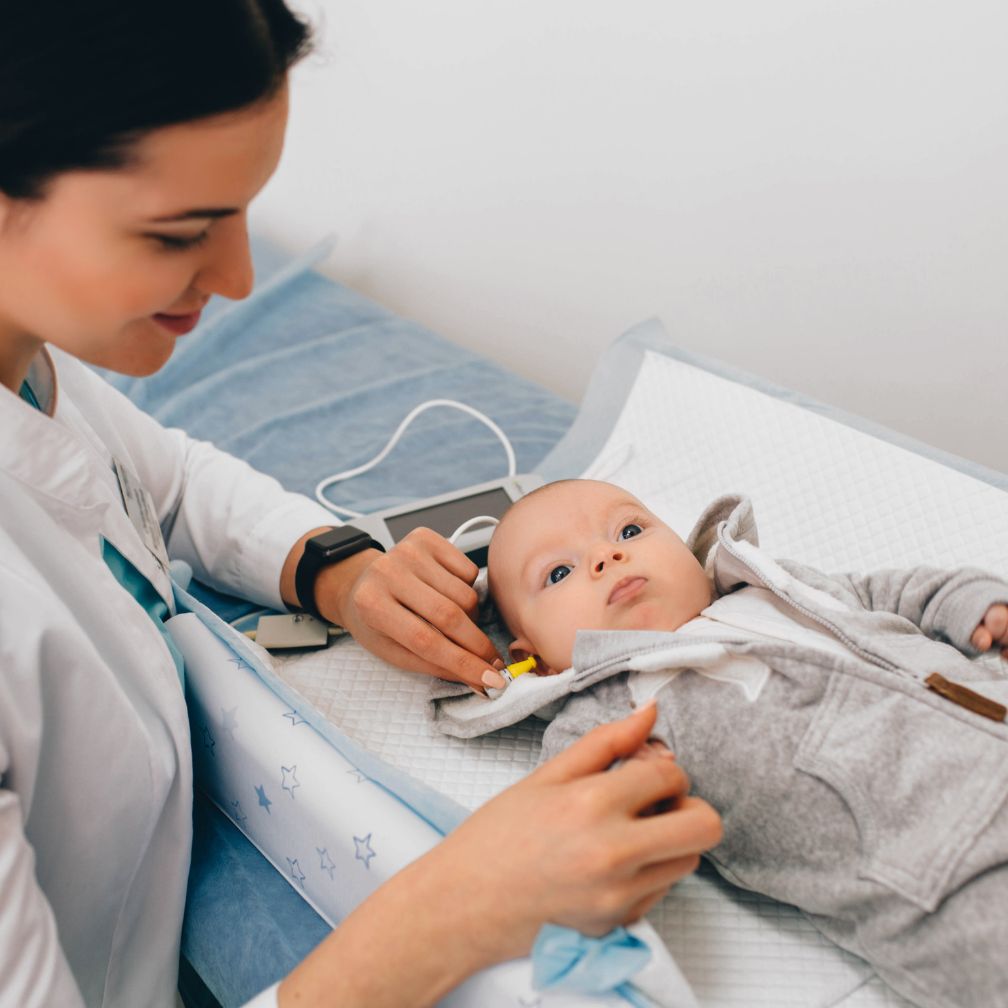
For mothers and fathers of newborns, getting a diagnosis of early auditory impairment brings considerable anxiety and dread. Nevertheless, the reassuring fact stands: with swift screening and appropriate intervention, infants facing hearing loss will routinely thrive. Unquestionably, such infants can develop spoken language, interpersonal skills, and solid relationships across their world, realizing a wonderful life!
Combining custom pediatric hearing aids with surgical cochlear implants provides two remarkable clinical tools for helping infants with hearing deficits. In the passage below, we evaluate their functional mechanisms and clarify how to select the ideal match for your infant.
Unpacking the Foundations of Infant Hearing Loss
Auditory decline across newborns can stem from various underlying sources, including:
- Known hereditary genetic markers (even absent any known parental history)
- Harmful in-utero viral infections like cytomegalovirus (CMV) and rubella viruses
- Unexpected labor complications, featuring perinatal hypoxia or premature delivery
- Select therapeutic drugs utilized within hospital neonatal intensive units
Which part of the process proves most critical? Early diagnostic testing. This necessity explains why babies in United States hospitals complete hearing tests before departing the nursery. Clinical pediatric audiology doctors consistently follow the official “1-3-6” operational timeline:
- Initial hearing check completed prior to 1 month of age
- Comprehensive diagnosis established prior to 3 months of age
- Specialized intervention (incorporating wearable options or targeted therapy) commenced within 180 days of birth
Hitting these clinical targets gives infants an exceptional path toward healthy speech, expressive language, and cognitive development. Should you seek further counsel on these clinical screenings, your child’s pediatrician will gladly guide you!
Understanding Amplification Devices for Infants
For babies presenting with mild to severe auditory impairment, programmed hearing aids generally provide the preferred initial approach. These miniature, wearable instruments amplify sound, enabling infants to perceive speech and ambient sounds with greater clarity.
Advanced pediatric hearing aids operate as:
- Thoroughly safe for application in newborns just a few weeks after birth
- Designed with soft, comfortable ear molds that adapt as the baby matures
- Designed including tamper-proof battery doors along with custom pediatric safety options
- Individually calibrated by a specialized pediatric audiologist to match your child’s specific auditory needs
While your infant develops, wearable units demand periodic adjustments to maintain ideal ear-canal fit and acoustic output.
Pediatric Cochlear Implants: An Advanced Solution
When a baby is identified with severe to profound sensorineural hearing loss and derives insufficient gain from wearable amplification, a cochlear device can be prescribed. In direct contrast to standard hearing aids, cochlear implants:
- Involve outpatient surgical implantation within the temporal bone delivering direct electrical signals to the brain
- Safely bypass damaged sensory cells of the inner ear system
- Convert acoustic waves into precise electrical signals that activate auditory nerve fibers directly
Surgically fitted cochlear implants serve as:
- Officially sanctioned by the FDA for infants aged 9 to 12 months and older
- Exceptionally beneficial when combined with structured early intervention and strong parental involvement
- Advised exclusively after comprehensive clinical evaluations by a pediatric audiology clinician and an ENT physician
This evaluative framework encompasses high-resolution imaging, specialized auditory testing, and in-depth discussions surrounding achievable long-term goals.
Hearing Aids or Cochlear Implants: Distinguishing Features
- Mild to severe hearing challenges suit Hearing Aids; Severe to profound hearing loss requires Cochlear Implants
- Non-Invasive external fitting: Hearing Aids; Invasive (Surgical): Cochlear Implants
- Standard sound amplification logic: Hearing Aids; Converts Sound Electrical Signals: Cochlear Implants
- Intervention starts in early infancy: Hearing Aids; Starts at 9-12 Months: Cochlear Implants
Hearing Aids vs. Cochlear Implants: Final Thoughts
In the event your infant receives a hearing loss diagnosis, you can rely on excellent technological options and dedicated expert support. By partnering with skilled pediatric auditory specialists, many young children achieve language skills that are on par with their peers.
Whether your youngster qualifies for external hearing aids or surgical cochlear implants, acting swiftly creates a profound lifelong advantage.
Are you looking for clarity regarding your infant’s hearing development? Call our clinic today for a complete diagnostic review and tailor-made care roadmap.
