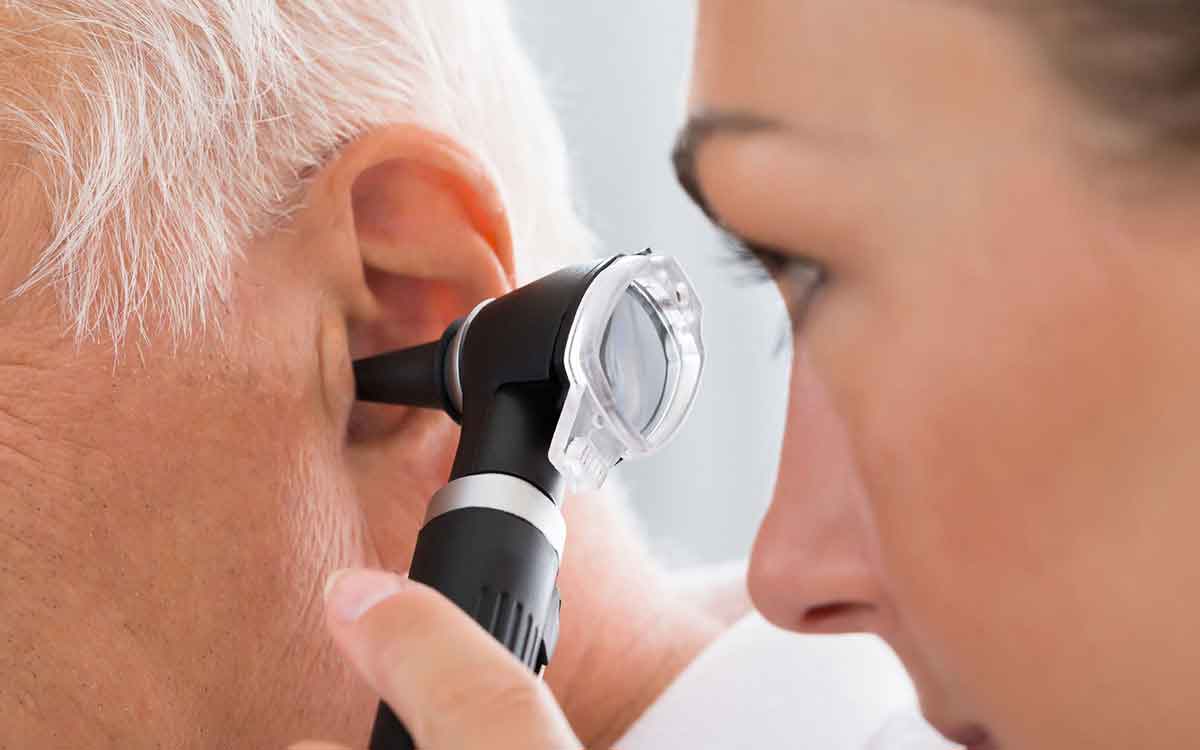
Because hearing loss typically progresses slowly, early indicators frequently go unrecognized by the individual. Subconscious adjustments, such as turning up the television or asking for clarification, often mask the early progression of hearing loss.
Seeking an early evaluation can help preserve hearing, enhance interpersonal dialogue, and safeguard overall quality of life.
Recognizing Typical Early-Stage Hearing Loss Symptoms
If you identify any of these early warnings, consider scheduling an audiological evaluation to determine your status.
- Impaired speech discrimination during dialogue within high-noise areas.
- Frequently requesting others to repeat themselves.
- Muffled or unclear speech, making it difficult to distinguish specific sounds.
- Setting higher volume levels for electronic devices than is typical.
- Trouble hearing higher-pitched sounds, such as high-frequency vocalizations, birds, or doorbells.
- The occurrence of tinnitus, manifesting as ringing or buzzing in the ears.
- Feeling cognitively fatigued after social interactions, due to the strain of auditory processing.
- Withdrawing from social situations because conversations feel overwhelming.
Initial symptoms of auditory decline may appear in either one or both ears and fluctuate in frequency initially. Since the auditory cortex adjusts to input shifts, subconscious adjustments often remain hidden until clinical hearing loss is evident.
Auditory Health: Current Statistics and Projections
According to the World Health Organization, over 700 million people will require hearing rehabilitation by 2050. Other noteworthy statistics consist of:
- By 2050, nearly 2.5 billion people are expected to experience some degree of hearing loss.
- Over 5% of the world’s population (430 million people) necessitates support to address disabling hearing loss.
- More than 1 billion younger individuals are at risk of permanent hearing loss caused by hazardous acoustic habits.
- Among those over the age of sixty, more than one-quarter suffer from disabling hearing loss.
The Value of Early Hearing Loss Detection
Neglecting auditory decline influences general health and daily wellness.
Clinical research associates hearing loss with higher incidences of withdrawal, mental health challenges, cognitive decline, and equilibrium problems.
Addressing symptoms at the onset facilitates a broader range of interventions and better long-term outcomes.
A hearing evaluation can determine whether changes are due to presbycusis-driven hearing loss, acoustic trauma, earwax buildup, infection, or underlying pathology.
Specific hearing variations are transient and resolve with clinical treatment.
In addition, employing protective measures or hearing technology at the onset may delay the advancement of hearing loss.
Guidelines for Consulting an Audiologist
A clinical hearing assessment is recommended under the following circumstances:
- Clinical indicators persist for a duration exceeding a few weeks.
- Auditory trouble begins to impact professional tasks or personal routines.
- You experience acute auditory decline, vertigo, or chronic ear ringing (this should be evaluated promptly).
Hearing evaluations are painless and supply valuable information regarding your ear health.
Reach out to our professional team today if you believe you could benefit from a hearing screening.
Auditory Health FAQ: Initial Symptoms
Q: Is hearing loss always age-related?
Answer: No. While common in seniors, hearing impairment can be caused by medications, loud noise, infections, or hereditary conditions.
Q: Can auditory impairment be clinically reversed?
Answer: Specific causes, including earwax blockage, may be susceptible to reversal through treatment. Other types are permanent but can often be effectively managed with treatment or hearing devices.
Question: What is the recommended frequency for hearing screenings?
A: Adults should have a baseline hearing test by age 50, or earlier if symptoms or risk factors are present.
