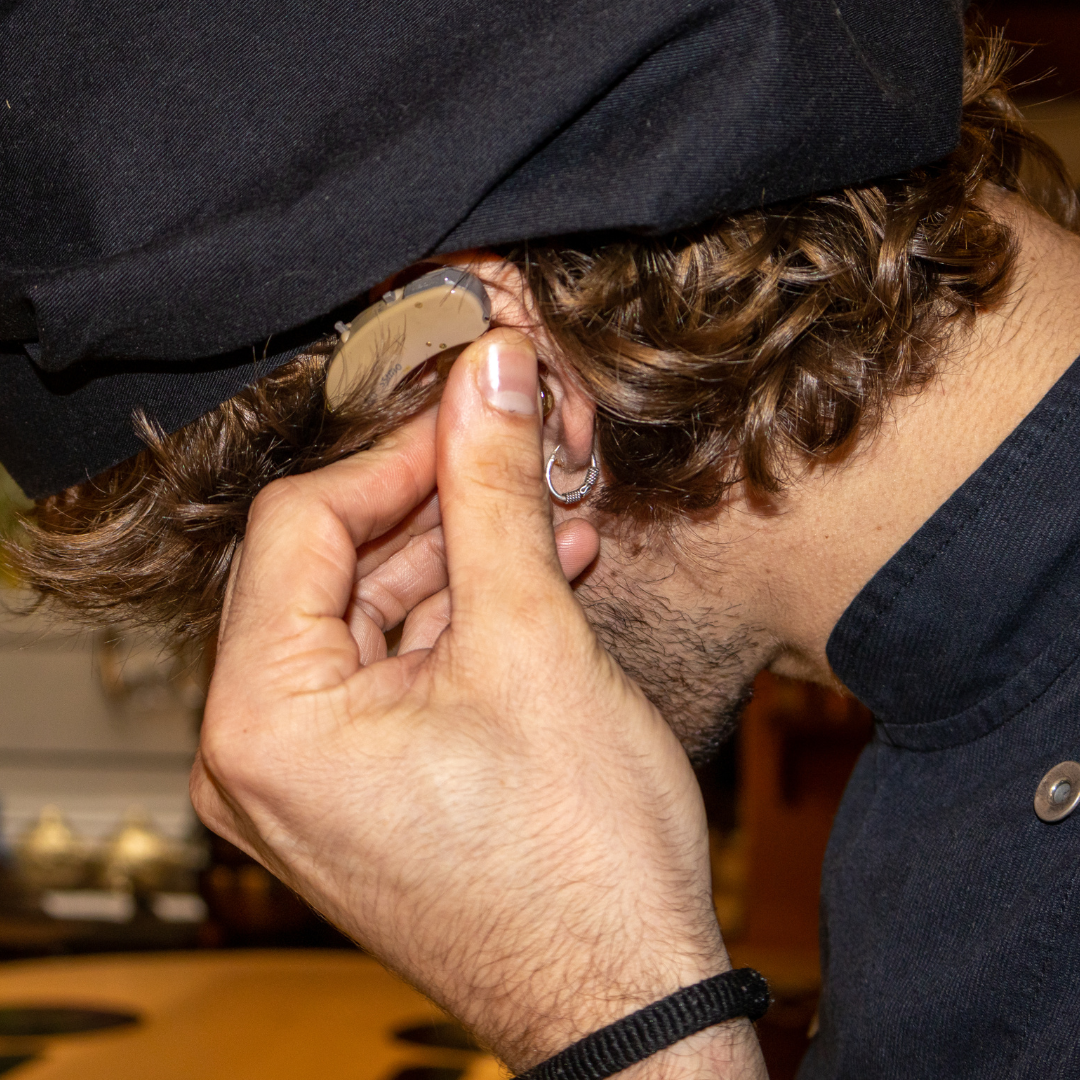
Group discussions in restaurants often become difficult to comprehend when room acoustics compete with your focus and hearing. Our specialists can evaluate hearing under both calm and noisy listening conditions to establish why noisy rooms present such difficulty. After diagnosing the source of your difficult hearing, we design targeted interventions tailored to your listening needs.
How Can Hearing Seem Normal at Home but Fail in a Restaurant?
A quiet setting creates an optimal signal-to-noise ratio, ensuring the conversational partner’s voice rises cleanly above ambient sounds. Busy dining establishments generate the exact reverse scenario. Cross-talk, ambient music, dishware noise, and harsh acoustic reverberation interfere with speech clarity, forcing your brain to labor to extract the target voice.
Such difficulty frequently signals sensorineural high-frequency hearing loss, auditory processing dysfunction, or noise-induced cochlear damage. Attention, fatigue, dim lighting, and distance from the speaker may make it worse. Certain patients demonstrate normal sensitivity on routine audiograms while struggling significantly during advanced speech-in-noise testing. Experiencing speech-recognition struggles in noisy dining venues warrants a formal audiological evaluation regardless of seemingly normal quiet hearing.
How Is High-Frequency Hearing Loss Diagnosed?
We initiate evaluation by exploring challenging acoustic environments, acoustic trauma history, subjective tinnitus, prescription drug profiles, and unilateral ear changes.
Diagnostic pure-tone audiometry establishes the softest auditory thresholds you can perceive across standardized frequencies via air and bone conduction pathways. Sensorineural high-frequency hearing loss demonstrates an audiometric slope reflecting diminished hearing thresholds as sound frequencies climb. Diagnostic evaluations may also integrate acoustic tympanometry to check middle-ear pressure alongside word-recognition testing to evaluate speech processing.
Because testing in a silent booth does not mirror real-life restaurant environments, speech-in-noise testing supplies vital diagnostic clarity. It evaluates sentence-level speech comprehension as competing background babble increases in volume. Together, these results show whether the problem involves audibility, speech clarity, background-noise processing, or a combination of factors.
The Role of Central Auditory Processing Disorders in Adults
A diagnosed auditory processing disorder affects how the brain’s auditory cortex analyzes, organizes, and interprets sound. A patient’s ears may demonstrate normal pure-tone sensitivity, but their central processing system struggles to separate background babble, distinguish consonant sounds, or follow swift discussions. We first evaluate peripheral hearing and then determine whether an individualized auditory-processing test battery or referrals to other professionals are appropriate.
Practical Strategies for Improving Speech Understanding in Noise
Small, intentional adaptations can optimize the clarity of speech reaching your ears and leverage helpful visual speech cues. Before heading out to eat, select dining spots with quieter acoustic profiles or dine during low-volume hours. Establishments designed with high-walled booths, acoustic wall treatments, heavy fabrics, and carpeting reduce reverberation far better than modern industrial spaces with bare surfaces.
At the restaurant:
- Request a table away from the kitchen, bar, speakers, and large groups.
- Position yourself with your back toward a solid partition to dampen intrusive background noise from behind.
- Face your conversation partners in good lighting.
- Keep the distance between speakers as short as comfortably possible.
- Position your better-hearing ear directly toward your main conversational partner.
- Request that companions rephrase misunderstandings using different words rather than repeating the same sentence.
- Clarify critical details explicitly instead of nodding along or pretending to catch the message.
- Step into a quiet area for a few minutes when listening fatigue begins to compromise focus.
- Encourage friends to enunciate clearly while maintaining an even, normal conversational tempo.
- Speaking with excessive volume creates acoustic distortion that fails to make words clearer.
Assistive Listening Technologies for Noisy Environments
Choosing the most effective auditory device requires evaluating diagnostic findings, acoustic lifestyle factors, and the presence of hearing loss. Prescription hearing aids fitted by an audiologist leverage directional microphone arrays, advanced digital noise reduction, and dedicated restaurant programs to focus on frontal speech while dampening background sound. Realistic expectations are vital, since even advanced hearing devices cannot completely erase background conversational chatter.
Utilizing an external remote microphone can deliver a dramatically superior signal-to-noise ratio. The remote unit is attached to the speaker’s clothing or placed nearby, transmitting that voice straight into compatible hearing aids or an audio receiver. This wireless transmission substantially diminishes the acoustic degradation caused by physical distance and ambient room noise.
Other clinically valuable tools include:
- Dedicated table microphones engineered to capture small-group dialogue
- Telecoils or hearing-loop systems in equipped venues
- Smartphone live-captioning platforms providing instant speech-to-text visual support
- Smart earbuds offering dedicated speech-in-noise amplification settings
- Decibel-monitoring apps and crowd-sourced dining platforms that track restaurant noise
We analyze suitable devices, verify functional compatibility with your current setup, and guide you through real-world operation.
Professional Audiological Solutions for Loud Listening Environments
A professional clinical assessment moves beyond basic baseline statements like “I hear fine in quiet rooms.” Our clinicians review the specific environments, vocal pitches, and decibel levels that trigger breakdowns to design a personalized test protocol. Your diagnostic appointment may incorporate pure-tone air and bone thresholds, acoustic middle-ear testing, word-recognition scores, and speech-in-noise measures. Advanced auditory-processing testing can be introduced whenever medical history and baseline assessments justify specialized evaluation.
Sudden, one-sided, or rapidly worsening symptoms may require medical evaluation by an ear, nose, and throat physician. Individualized diagnostic care pinpoints the precise physiological etiology rather than merely blaming restaurant noise for communication struggles.
Book Your Comprehensive Hearing Evaluation Now
If noisy restaurant gatherings leave you struggling to follow dialogue, pulling away, or feeling completely drained, schedule an audiological evaluation with our team. We can evaluate targeted solutions to optimize your hearing in noisy environments using prescription hearing aids, assistive listening technology, or communication strategies tailored to you.
Connect with us today to arrange your clinical visit and take the first step toward clearer, easier dining communication.
